

Starting a sim racing setup can feel simple until you try to choose sim racing pedals. That is where many sim racers get stuck. Pedals affect how your car slows, how stable you feel, and how much trust you have in each lap. If you want a better racing experience, it helps to know which features matter first and which ones can wait.
Key Highlights
- Sim racing pedals can shape your racing setup more than many beginners expect.
- A load cell brake helps you build muscle memory through pressure, not just travel.
- The right pedal set improves pedal feel, confidence, and repeatable braking points.
- Build quality matters because weak pedals can wear faster and feel less dependable.
- Your mounting solution affects comfort, control, and steady pedal response.
Beginner’s Guide: Getting Started with Sim Racing Pedals
If you are new, focus on control, comfort, and a stable pedal base. Many beginners look at looks first, but your braking confidence matters more than styling.
You also need to think about your racing rig and racing wheel. A great set of sim racing pedals will still feel poor if they slide, flex, or sit at the wrong angle. That leads nicely into what you need before buying.
What You’ll Need Before You Start
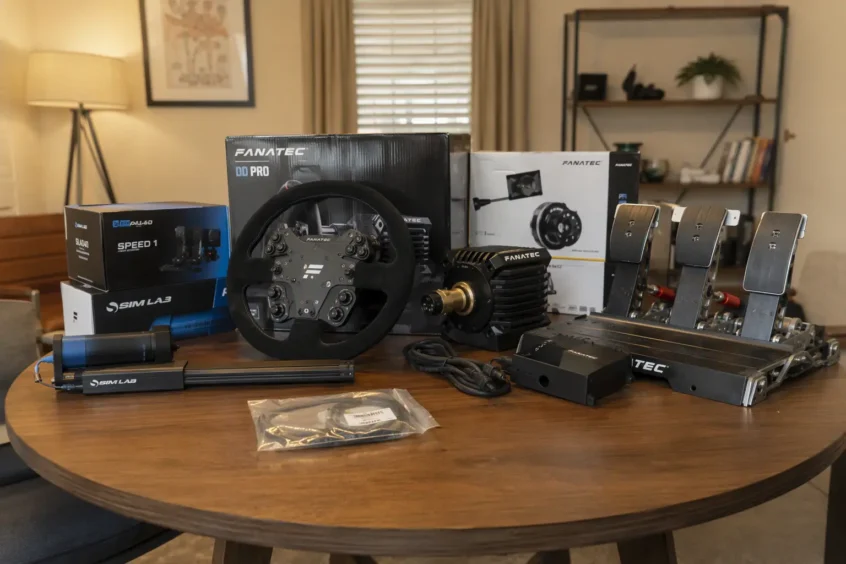
Before buying a pedal set, check your sim rig or desk area first. Even good pedals can disappoint if your mounting solution is weak or your seat position is poor.
Value is not only about price. It is about how well the CSL Elite pedals fit your racing wheel, space, and setup goals. A beginner often gets the best value from a dependable set that mounts securely and feels easy to trust.
Types of Sim Racing Pedals Explained
The short answer is simple: the main types are potentiometer, load cell, and hydraulic pedals. Each one measures your input in a different way, so each one changes pedal feel and consistency.
Here is the basic difference:
- Potentiometer pedals measure how far the pedal moves.
- Load cell pedals measure pressure.
- Hydraulic pedals use fluid to copy a real race car feel.
- Sim pedals with more realism usually cost more.
A load cell can help with trail braking and steady brake points. Hydraulic pedals feel closest to a real car, though they are pricier and need more upkeep.
How Sim Racing Pedals Affect Performance
Yes, sim racing pedals matter a lot because they shape how repeatable your inputs are. A wheel can feel exciting with force feedback, but your feet often decide whether you hit the same braking point every lap.
That is why better pedal feel, especially with active pedals, can support consistent lap times. If the brake pedal reacts the same way every time, you stop guessing. You start trusting your muscle memory instead.
Think about one simple use case. You approach the same corner ten times. If pedal response changes from lap to lap, your lap time changes too. If it stays steady, your confidence grows, taking your racing experience to the next level.
Essential Features to Look for in Sim Racing Pedals
When choosing between a load cell and potentiometer design, start with the feature that affects your driving most: how the brake works. A load cell sensor gives more precise control through pressure for serious sim racers and drivers who want to improve braking habits.
Look for these points in style racing:
- Strong build quality for long-term use
- Stable pedal travel without unwanted flex
- Clear, repeatable pedal feel
- A sensible price range for your needs
- A brake design that matches your skill level
If you are unsure, ask yourself one question: do you want simple entry-level use, or better braking consistency? Potentiometer pedals are a fair starting point. A load cell brake usually gives more room to grow.
Step-by-Step Guide to Setting Up Your Sim Racing Pedals
Once you have picked your sim racing pedals, setup matters as much as the purchase. This simple guide helps you sort budget, mounting solution, connection, and adjustment. If you want a useful buyer’s guide for 2026, these basics are still the starting point.
Step 1: Choosing the Right Pedal Set for Your Budget
Start by matching your pedal set to your needs, not just your budget, especially when considering your steering wheel. The best value usually comes from buying the highest build quality you can use properly in your current setup.
A simple way to think about it is below:
| Budget focus | What to prioritise |
| Lower price range | Basic control, easy setup, simple brake feel with hydraulic damping. |
| Mid price range | Better build quality, more consistent response |
| Higher price range | Stronger brake feel, more realism, longer-term upgrade path |
If you mainly want cleaner braking, spending more on a better cell brake can make sense before other upgrades. That is often a smarter move than chasing looks or extra features you will not use.
Step 2: Mounting and Positioning Your Pedals Correctly
A stable mounting solution is one of the most skipped steps for beginners. Yet it affects comfort, pedal travel, and control every time you drive.
Check these basics:
- Keep the pedal base firmly fixed
- Place your feet so your knees stay relaxed
- Make sure full pedal travel feels natural
- Test for movement in your sim rig
For optimal performance, do one quick test after mounting. Press the brake hard several times. If the pedals shift or your body slides, your position needs work. Small changes here can make a big difference.
Step 3: Connecting Your Pedals to Your Sim Rig or PC
Next, connect your best sim racing pedal set to your sim rig or PC and make sure the inputs register cleanly. This step sounds basic, but poor setup can hide the real feel of the pedals.
If you are comparing load cell and potentiometer options, connection is not the main deciding factor. The bigger difference is how they measure braking input and how that shapes your driving experience and feedback.
A useful check is to press each pedal slowly, then quickly. You want smooth input without spikes or dead zones. That tells you your racing setup is ready for calibration.
Step 4: Calibrating and Adjusting Pedal Settings
Calibration is where your pedals start to feel personal. Set the brake pedal so full braking matches firm but manageable brake pressure from your foot.
Entry-level options often focus on simple travel-based input. Higher-end pedals usually aim for more precise feedback and stronger consistency. That difference shows up most clearly under heavy braking.
Use a simple method. Brake at the same point for several laps, then adjust only one setting. If pedal response feels easier to repeat, keep it. If not, go back. One change at a time works best.
Step 5: Testing and Fine-Tuning for Comfort and Performance
Now test your setup in a short session and pay attention to comfort first. If your legs tense up or your ankle angle feels awkward, your results will suffer even if the pedals are good for a long time.
Then focus on consistent braking over outright speed. This is how muscle memory forms. Once your foot pressure feels natural, your lap time usually becomes easier to repeat.
For many drivers, that is why upgrading pedals before other gear is worth it. A steadier brake input supports your driving style every lap. Better control often beats extra flash in other parts of the rig.
Conclusion
In conclusion, choosing the right sim racing pedals can significantly enhance your overall racing experience, especially for beginners. By understanding the essential features and how they impact performance, you can make informed decisions that suit your budget and needs. Remember to take the time to set up and calibrate your pedals correctly; this will ensure optimal comfort and responsiveness during your races. As you progress in your sim racing journey, upgrading your pedals can be a worthwhile investment, providing you with a competitive edge. If you’re eager to elevate your sim racing setup, consider booking a free consultation with our experts to find the perfect pedal system tailored just for you. Happy racing!
Frequently Asked Questions
Are sim racing pedals worth upgrading before other gear?
Yes, often they are. Sim racing pedals can improve pedal feel and make your racing setup easier to trust. If your braking becomes more repeatable, consistent lap times and optimal performance are usually easier to achieve than with a wheel-only upgrade.
How do load cell pedals compare to potentiometer pedals for beginners?
A load cell measures pressure, while potentiometer pedals measure movement. For beginners, potentiometer pedals are simple, but a load cell often gives steadier pedal response. With good build quality, that can help braking consistency and support better lap time control over time.
What’s the best way to find reliable reviews for sim racing pedals?
Look for a review that explains direct drive pedal feel, build, and long-term use, not just first impressions. The most useful feedback usually comes from sim racers who show how a pedal set works in a real racing setup and compare braking consistency clearly.
Which pedal sets are ideal for a home racing simulator setup in Australia?
The ideal pedal set for a home racing simulator depends on your sim rig, space, and price range. For Australia, focus on secure mounting, dependable braking, and achieving accurate driving feedback and the right feature level for your use, rather than chasing CSL pedals or any single label for the ultimate realism first.
Want more news from the Tech world for Gaming Peripherals to Hardware Click Here
