

The traditional office telephone system associated with a desktop and an office building is becoming increasingly outdated in light of modern workplace dynamics. In this day and age, employees work from multiple locations, including home offices, co-working spaces and corporate headquarters, while clients always demand the same quality of service regardless of where they call from.
Cloud-based business phone systems provide an easy solution for such situations, allowing users to route calls, manage voicemail, and other related processes in a centralized manner in an internet-based platform that any member of the team can access remotely. Rather than depending on the availability of one office phone only, the entire call center infrastructure is hosted online.
For businesses navigating the realities of distributed staff, this kind of flexible, centrally managed communication system has quickly become less of a convenience and more of an operational necessity.
Continue reading to find out more about cloud PBX solutions for remote and hybrid teams.
1. Access the Same Phone System From Anywhere
The core advantage that cloud PBX providers offer remote and hybrid teams is location independence. With a full cloud-based phone system, there is no need to use any local hardware, and all business calls can be made by any employee, depending on where he/she works at the moment.
The calls, voicemail messages and extensions are all connected not with any specific physical workplace but with the person or the department. A person who works from his spare room sounds exactly as professional and reachable as an employee working from his office.
In addition, with a cloud-based system, it becomes easier to onboard a remote employee because there is no need to purchase any hardware or to install anything locally. It makes the whole process much faster and is needed when the hiring takes place in different locations and different countries.
2. Route Calls to Employees Wherever They Work
Customers calling a business don’t think about where an employee happens to be sitting; they just expect a smooth, professional interaction.
Features like auto-attendants, call queues, and intelligent call routing ensure that a call reaches the right department or person regardless of which office, home, or time zone that team member is working from, automatically forwarding it to whoever is next in line rather than letting it go unanswered. This consistency protects brand reputation and customer satisfaction even as internal staffing arrangements shift week to week, which is increasingly common as hybrid schedules become the norm across many industries.
3. Stay Connected Across Multiple Devices
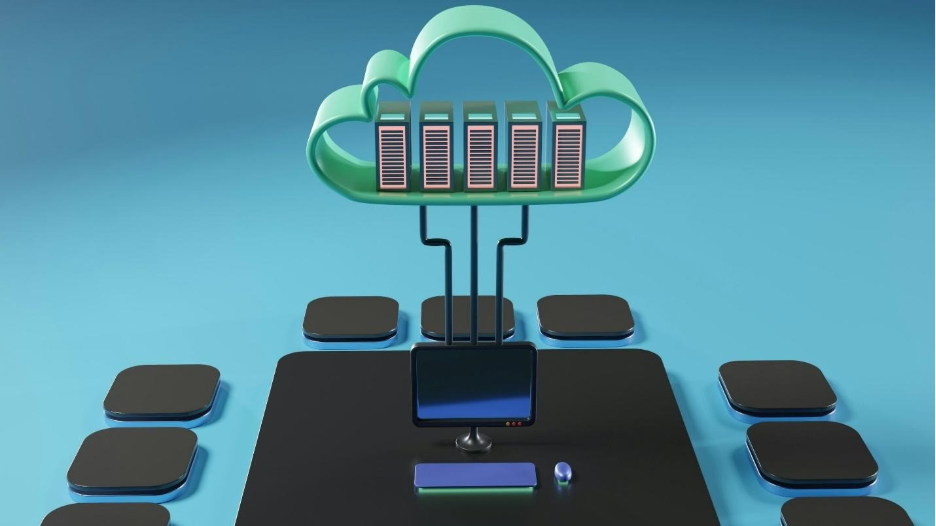
Hybrid work often does not involve working from just one device and one location. An individual may start the day responding to calls on a laptop from home, transition to using an app on his or her smartphone while traveling to a client’s office, and then complete the rest of the day responding to calls on a desk phone in the office itself. Hybrid cloud PBX systems enable such flexibility by seamlessly connecting calls, voicemail, and extensions on laptops, smartphones, and desk phones.
Likewise, this flexibility has become essential as a large share of the workforce continues to split working hours between locations.
In fact, data from the U.S. Bureau of Labor Statistics shows telework rates have remained well above pre-pandemic levels for several years, meaning multi-device flexibility isn’t a niche feature but a core requirement for how many employees now get through their workday.
4. Scale Communication as Teams Change
Traditional on-premises phone systems require physical hardware, dedicated phone lines, and technician visits every time a company needs to add users or open a new office. Cloud PBX platforms remove most of that overhead, since new extensions and users can be added or removed through a centralized dashboard rather than a hardware installation.
This is especially valuable for hybrid teams that fluctuate in size throughout the year, allowing a business to scale its communication system up or down without paying for infrastructure it isn’t using. A department that doubles in size after a busy hiring season, or shrinks after a seasonal contract ends, can adjust its phone system just as quickly as its headcount changes.
5. Monitor Distributed Team Performance Centrally
In situations where employees are dispersed in various physical locations, it becomes challenging for supervisors to have insight into call volumes, response times, and workload capacity through physical presence at the place of work.
Cloud PBX platforms solve this with centralized analytics and reporting, giving managers visibility into call patterns, missed calls, and team performance from a single dashboard, no matter where each employee is physically located.
6. Maintain Business Continuity When Employees Aren’t in the Office
A single office phone system tied to physical hardware creates a single point of failure. If the building loses power or staff simply can’t get into the office, calls can go unanswered entirely. Cloud PBX systems are built on Voice over Internet Protocol, or VoIP, technology, which converts voice signals into data that can travel over any available broadband connection rather than a fixed line within one building.
According to the Federal Communications Commission, interconnected VoIP providers are held to specific obligations around service reliability and accessibility, giving businesses added assurance that this infrastructure is built for long-term use.
For a hybrid team, that resilience means the company’s ability to answer customer calls doesn’t depend on any single office being open, staffed, or even operational on a given day.
Wrapping Up
Remote and hybrid workplaces are not merely temporary workarounds but permanent ways of working for a significant portion of the workforce. The cloud PBX providers have recognized this and created phone systems where the system follows the worker and not the other way around.
This allows remote workers to have consistent customer experiences, scalable pricing, and a centralized approach to management, as well as the ability to communicate professionally regardless of their physical location.
