

Before We Begin – A Quick Catch-Up With CONTROL
Before jumping into CONTROL Resonant, it is worth taking a few minutes to remember just what the hell happened in the original CONTROL, because if you thought Remedy was going to make this universe any easier to understand, I have some bad news for you.
Back in 2019, Jesse Faden walked into the Federal Bureau of Control looking for her missing brother, Dylan. The Bureau itself was housed inside the Oldest House, a brutalist building in Manhattan that was anything but normal. The building shifted, changed and seemed to exist outside the rules of reality, while the Bureau studied objects and events that had been affected by something known simply as the paranatural.
Jesse arrived just as everything was going spectacularly wrong. The Bureau had been invaded by an extradimensional force known as the Hiss, which had infected agents and turned the Oldest House into a nightmare of floating bodies, corrupted minds and reality-bending phenomena.
Jesse was not exactly a normal person herself. Her childhood in Ordinary, Maine had already exposed her and Dylan to something far beyond our understanding, with the mysterious slide projector incident playing a major role in their lives. The pair were separated, with Dylan eventually ending up in the custody of the FBC while Jesse escaped.
When Jesse finally found her way into the Oldest House, she discovered that Dylan had become deeply involved in the Bureau’s experiments and had ultimately been corrupted by the Hiss. Jesse fought her way through the Bureau, discovered the truth behind much of what had happened and eventually confronted her brother.
She managed to shut down the source of the Hiss invasion and cleanse Dylan of its immediate influence, but Dylan survived in a coma rather than simply walking away from everything that had happened to him.
Jesse, meanwhile, became the new Director of the FBC.
And that is where things get interesting.
The original CONTROL wasn’t really about giving you answers. It was about giving you just enough information to make you ask even more questions. The expansions pushed that even further, digging into the strange relationship between the FBC, the Board, the Astral Plane, the Oldest House and the various supernatural forces surrounding Jesse and Dylan.
So when CONTROL Resonant begins, we aren’t simply getting another adventure in the Oldest House. Dylan has been asleep for years, and the world outside has changed considerably. The FBC now has a very different problem on its hands, Manhattan itself is caught up in a new paranatural crisis, and Dylan is suddenly at the centre of it.
And yes, if you are wondering where Jesse is, she hasn’t simply been forgotten.
In fact, her relationship with Dylan is arguably more important to CONTROL Resonant than ever.
Welcome Back to the CONTROL Universe
There is something immediately impressive about CONTROL Resonant.
It feels like CONTROL, but it doesn’t feel like a simple sequel trying to copy what worked the first time.
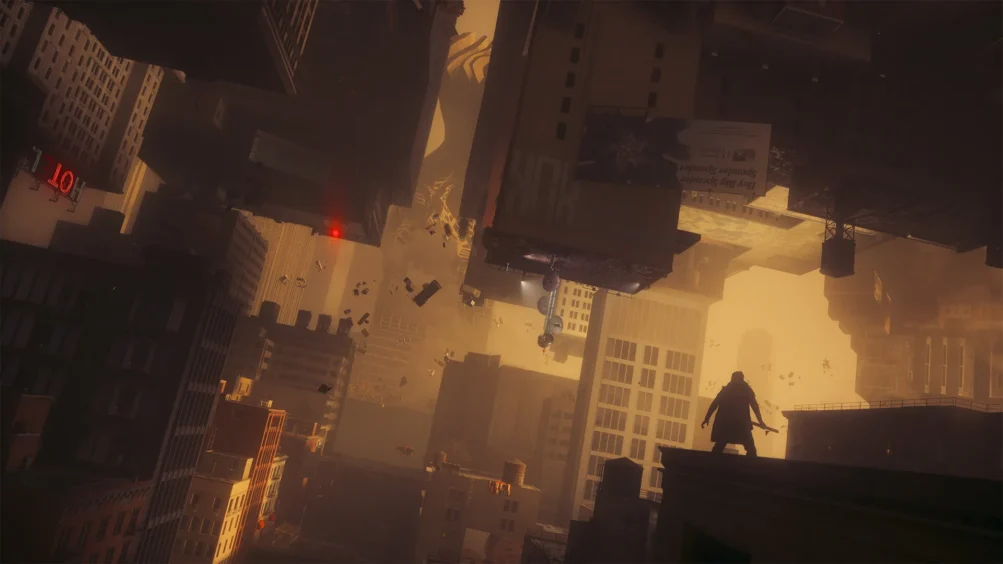
Remedy has taken the bizarre foundation of the original game and pushed it outward. Instead of spending almost the entirety of the first game trapped inside the Oldest House, Resonant takes Dylan into Manhattan, where the paranatural has begun affecting the world around it in increasingly ridiculous and spectacular ways.
And I mean ridiculous in the best possible way.
This is the sort of game where you can walk into an area thinking you understand what you are looking at, only for the environment to do something that makes you question whether you have accidentally taken something you shouldn’t have.
That trademark Remedy weirdness is still here, and thankfully it hasn’t been watered down.
The Story Is Completely Mental – In The Best Possible Way
The biggest reason I enjoyed CONTROL Resonant so much is the story.
Remedy has once again managed to create something that is difficult to explain without making it sound completely insane.
There are mysterious forces, altered realities, paranatural phenomena, strange organisations, questions about identity, family, control and the nature of reality itself. Then just when you think you have finally figured something out, the game throws another piece of information at you and suddenly you are back to wondering what the hell is actually happening.
That is exactly what I wanted from this sequel.
Dylan is also a fascinating protagonist because his relationship with the FBC is completely different from Jesse’s. Jesse entered the Oldest House searching for answers. Dylan has spent much of his life trapped inside this world, and now he is being forced to experience the outside world in a completely different way.
That reversal gives the story a really interesting perspective.
Jesse’s story was about discovering the hidden world behind reality.
Dylan’s is about discovering what reality actually means to him.
The relationship between the two siblings gives the story an emotional core that stops all of the supernatural madness from becoming nothing more than an excuse for increasingly weird set pieces. The Faden family has always been at the heart of CONTROL, and Resonant understands that.
Combat Is Bloody Brilliant
If there is one area where CONTROL Resonant immediately feels different from its predecessor, it is combat.
Jesse’s Service Weapon was one of the defining elements of the original game. Dylan has something very different.
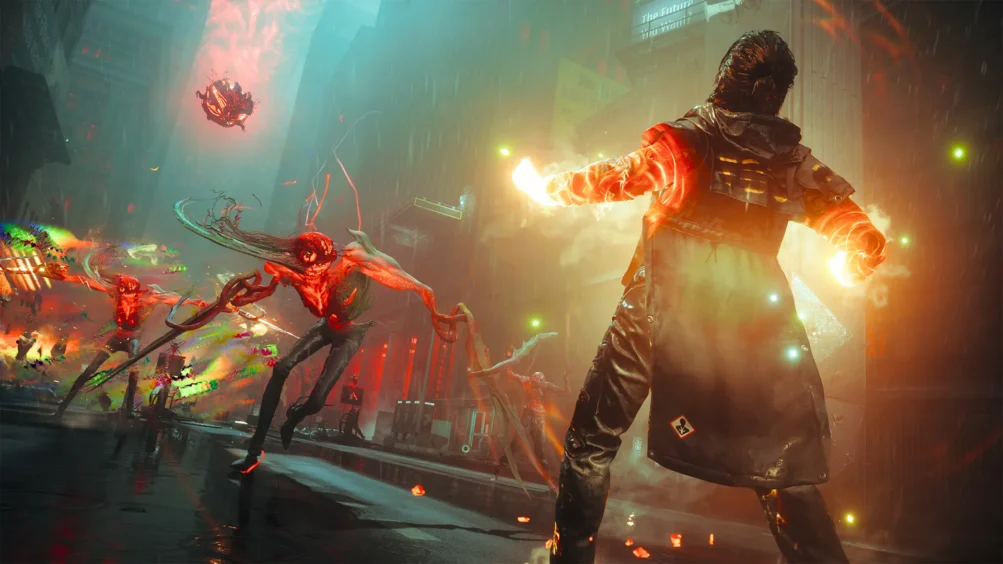
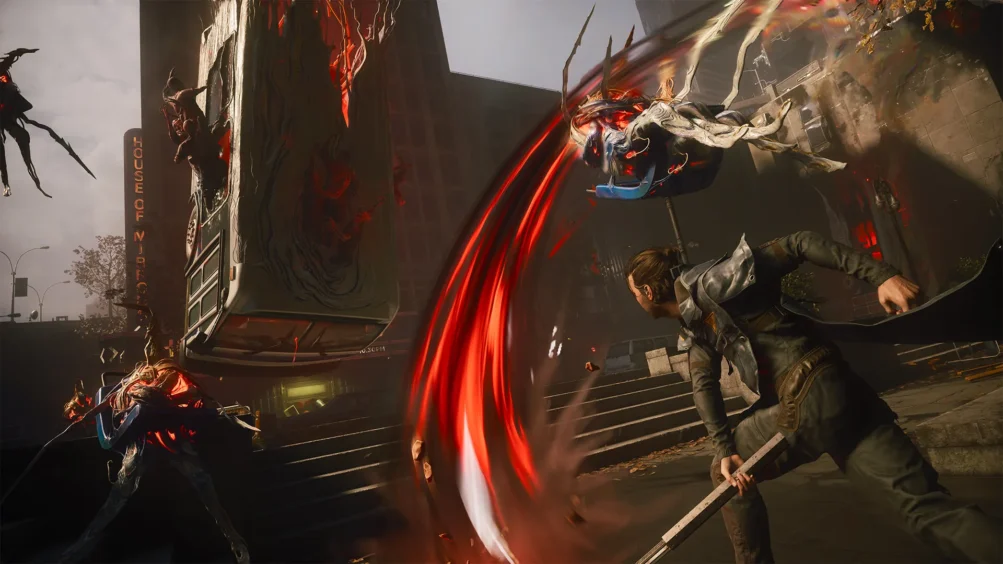
The Aberrant is a shapeshifting melee weapon that can change its form and dramatically alter how you approach combat. Instead of standing back and simply blasting enemies from a distance, Dylan is much more direct.
And I absolutely love it.
Combat feels aggressive, fast and physical. You are constantly moving, attacking, dodging and looking for opportunities to chain your abilities together. There is much less of the traditional cover-shooter mentality and far more emphasis on getting stuck into the action.

It makes fights feel considerably more physical than they did in the original.
There are different weapon forms and abilities to experiment with, allowing you to build Dylan around the way you actually want to play. Remedy has also given players more freedom over loadouts, meaning that your choices can have a noticeable impact on how you approach individual encounters.
This is particularly important because enemies can become absolute bastards once the game starts throwing multiple threats at you simultaneously.
You can’t simply stand in one place and hope everything dies before it reaches you.
You need to move.
You need to think.
And sometimes you need to run away because you’ve made a complete mess of things.
That last one might just be me.
The Combat Has A Fantastic Sense of Impact
What makes the combat work so well is the feeling of impact.
Attacks don’t simply happen. They have weight.
Enemies react, environments respond and Dylan’s abilities make you feel like you are actually throwing yourself into the middle of a paranatural disaster rather than simply controlling another character in a third-person action game.
There is also a lovely rhythm to combat once you start understanding what the game wants from you.
Attack.
Move.
Use an ability.
Change your weapon form.
Exploit an opening.
Get the hell out of the way.
Then do it all over again.
It is bloody good fun.
Manhattan Looks Incredible
Then there are the visuals.
CONTROL was already an impressive-looking game, but CONTROL Resonant is on another level.
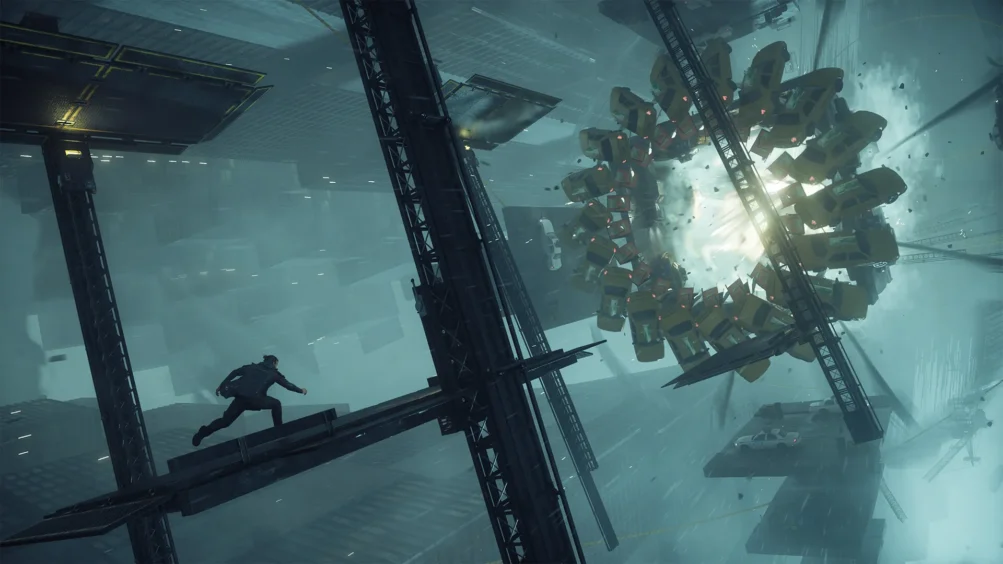
Remedy has created a version of Manhattan that looks recognisable enough to understand but distorted enough to feel completely wrong.
That contrast is one of the game’s biggest visual strengths.
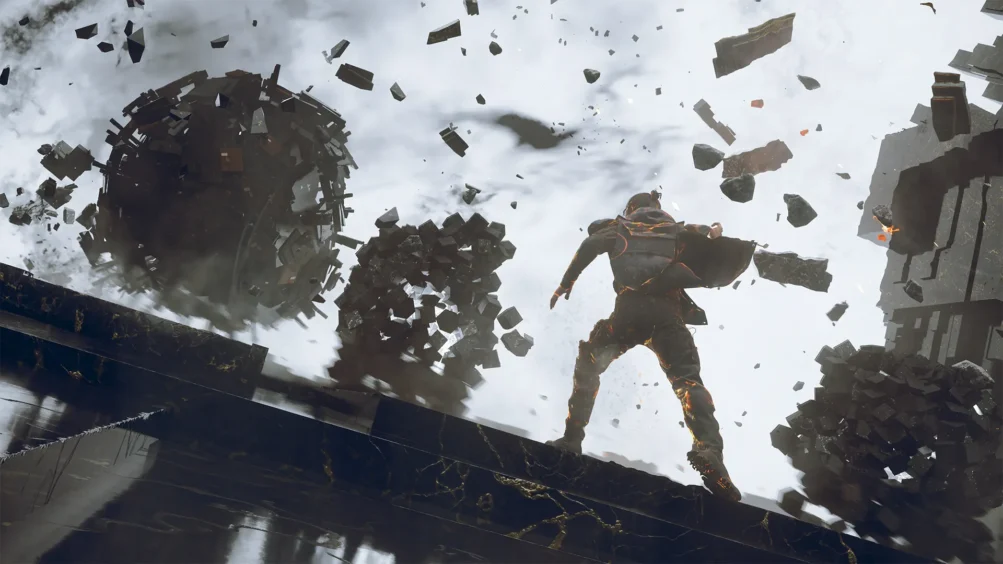
You can look at something and immediately understand what it is supposed to be, but something about it doesn’t quite fit. Buildings, streets, interiors and supernatural spaces are constantly being warped by the events taking place around Dylan.
And then the game will suddenly throw something completely bonkers at you.
The lighting, particle effects, environmental detail and character work all come together extremely well, but it is the art direction that really deserves the praise.
This isn’t simply a technically impressive game.
It has a very strong visual identity.
You know you are playing CONTROL Resonant within seconds.
The World Is Bigger Without Becoming A Typical Open World
One thing I particularly like about Resonant is that Remedy hasn’t simply turned CONTROL into another giant open-world game.
Manhattan is divided into larger areas that gradually become more accessible as Dylan gains abilities, access and the trust of characters he meets.
That means exploration actually has a purpose.
You aren’t just running across a massive map because someone decided every modern game needs one.
There are areas to investigate, secrets to discover and reasons to return to places you have already visited.
It also works beautifully with the tone of the game because you never quite know what you are going to find.
And considering this is a game where reality itself is apparently having a nervous breakdown, that uncertainty is exactly what you want.
Remedy Still Knows How To Tell A Story
One of the things that has always separated Remedy from a lot of other developers is its willingness to experiment with storytelling.
CONTROL Resonant continues that tradition.
There are traditional conversations and cinematic moments, but the game also uses environmental storytelling, documents, recordings and some wonderfully strange sequences to flesh out its world.
Not everything is handed to you.
Sometimes you have to actually pay attention.
And I think that is important because the world of CONTROL would lose something if Remedy simply explained everything in a cutscene.
The mystery is part of the experience.
The confusion is part of the experience.
That moment where you sit there thinking, “Hang on… what the actual fuck?” is practically part of the gameplay loop.
It Can Still Be Bloody Confusing
Of course, that approach isn’t going to work for everyone.
CONTROL Resonant is not the sort of game you can switch your brain off with and expect everything to make perfect sense.
There are moments where the story deliberately leaves you questioning what you have just seen, what something means and whether the explanation you have constructed in your head is actually correct.
Personally, I love that.
But if you prefer games that explain their mythology clearly and tie every loose end into a neat little bow, this probably isn’t going to be your thing.
Thankfully, the main narrative remains engaging enough that even when you don’t completely understand something, you still want to know what happens next.

The Sound and Atmosphere
The atmosphere is another area where Remedy absolutely nails it.
The sound design, music and environmental effects combine to make the world feel genuinely unsettling at times.
There is a constant feeling that something isn’t quite right.
Even when you are simply moving between objectives, the world around you feels like it could change at any moment.
That atmosphere is incredibly important because without it, all of the weirdness could easily become meaningless spectacle.
Instead, the game manages to maintain that uneasy feeling that made the original CONTROL so memorable.
What About The Original?
Having now played both games, I don’t think CONTROL Resonant replaces the original.
It doesn’t need to.
The two games complement each other.
CONTROL was about Jesse discovering the FBC, the Oldest House and the paranatural world while trying to find her brother.
Resonant takes the consequences of that story and pushes them outward, while giving Dylan his own identity as a protagonist.
That was a smart decision.
Trying to simply recreate Jesse’s journey would have felt like a retread.
Instead, Remedy has taken the characters, mythology and ideas established in the original and pushed them into something different.
And somehow, it still feels unmistakably like CONTROL.

Any Problems?
It isn’t perfect.
The sheer amount of weirdness can occasionally make certain sections feel deliberately obscure, and there are moments where navigation can become a little frustrating when you are trying to work out exactly where the game wants you to go.
Some encounters can also become extremely hectic, particularly when several enemy types are thrown at you at once.
But honestly, these are relatively minor complaints compared with what the game gets right.
The combat is fantastic, the story is fascinating, and the visuals are bloody gorgeous.
Final Verdict
CONTROL Resonant is exactly the kind of sequel I wanted.
It doesn’t simply take the original game, give it prettier graphics and throw another villain at you.
Instead, Remedy has taken the bizarre world of CONTROL and expanded it in a way that feels meaningful.
Dylan is a great new protagonist, the relationship between him and Jesse gives the story real emotional weight, the combat is absolutely superb and the visual design is outstanding.
Most importantly, it still has that wonderfully fucked-up Remedy feeling where you never quite know what is going to happen next.
You can be fighting your way through Manhattan one minute and then staring at something that makes you question whether reality has completely collapsed.
And that is exactly why I love it.
CONTROL Resonant is weird, ambitious, visually stunning, story-driven and bloody good fun to play.
If you loved the original CONTROL, this is a sequel you should absolutely experience.
If you’ve somehow never played the original, I’d still recommend giving Resonant a go, although honestly, once you’ve finished this one, you are probably going to want to go back and play the first game anyway.
Remedy has once again proven that you don’t need to make everything normal to make it brilliant.
Sometimes the best games are the ones that make you sit there afterwards thinking:
“What the hell did I just play?”
And then immediately wanting more.
Read more awesome reviews >>here<<.
The game was provided to us for the express purpose of reviewing.
Written by myself then edited and formed by my partner.
Reviewed and played on PC.
Review Summary
What is CONTROL Resonant?
CONTROL Resonant is a supernatural third-person action game from Remedy Entertainment and the sequel to 2019’s CONTROL. It follows Dylan Faden as he confronts a new paranatural crisis affecting Manhattan.
What does it add?
Resonant expands the CONTROL universe beyond the Oldest House, introduces Dylan as the playable protagonist, adds a melee-focused combat system built around the shapeshifting Aberrant weapon, and provides a new chapter in the story of the Faden siblings.
Is the combat good?
Yes. Combat is fast, aggressive and highly satisfying, with different weapon forms and abilities allowing players to customise how Dylan approaches encounters.
Is the story good?
Yes. The story is one of the game’s biggest strengths, combining the Faden family story with Remedy’s trademark paranormal mysteries, surreal events and reality-bending storytelling.
Does CONTROL Resonant look good?
Absolutely. The distorted version of Manhattan, detailed environments, effects and strong art direction make CONTROL Resonant one of the more visually distinctive action games of 2026.
Should you play it?
If you enjoyed CONTROL, absolutely. CONTROL Resonant successfully expands the original game’s world while giving Dylan his own identity, combat style and story.
What score does CONTROL Resonant get?
9/10
