

It’s well known that younger people are increasingly ignoring Australia’s mainstream media, with a majority of people aged under 25 having never read a newspaper or listened to news on the radio. TVs, for most people under 40, are for gaming, live sport and streaming. The chances of Australia’s media companies ever luring them back aren’t helped by the simple fact that Australia’s media owners and executives are a gerontocracy.
If you assumed that means Rupert Murdoch, think again. Murdoch père is a spring chicken compared to another long-time media proprietor in the 97-year-old, Bermuda-based Bruce Gordon. The former magician’s main investment company, Birketu, now directly controls more than 25% of Nine Entertainment, with an economic interest of another 6%. That’s in addition to its control of Gordon’s original media company, the WIN regional TV network.
Gordon’s son Andrew is aged 53 and a director in many of Gordon’s companies. Despite stepping down two years ago, Bruce remains “the ultimate decision maker at Birketu”, according to the Financial Review. And his investment hasn’t exactly yielded a motza: Nine was worth just over $4 billion when it merged with Fairfax in late 2018; it’s now worth around $1.2 billion. Nine’s now-not-so-new CEO, by the way, is 56-year-old Matt Stanton.
Related Article Block Placeholder
Article ID: 1265938
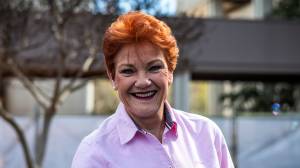
Rupert Murdoch gave Gordon his big entry into media, back in the 1970s, when he sold WIN to Gordon. That was in the days when Rupert was still Australian and wanted to move into metropolitan television. The Murdochs don’t control all of News Corp — their stake is around 18%, but they have a 40% stake in the company’s voting shares. The company’s assets include more than half of the newspaper market in Australia, old-Nazi-yells-at-cloud-platform News24 (formerly Sky News) and a radio network. Rupert’s only 95 and still racking up marriages. His anointed heir Lachlan is 55. The company’s international CEO Robert Thomson — whom Rupert wanted to push out but couldn’t — is 65.
Then there’s Network Ten, currently controlled by US giant Paramount Skydance, which is dominated by Oracle founder Larry Ellison. Ellison turned 82 on August 17, though his film and TV business is in the hands of 43-year-old son David Ellison, who is pushing the US$111 billion Paramount bid for Warner Bros Discovery, now in the US courts. Larry has personally guaranteed the more than US$40 billion in borrowings Paramount will need if the deal goes through.
Then finally there’s Southern Cross Media Group, containing the leftovers of Seven West Media, which was controlled from its creation in 2011 by 86-year-old Kerry Stokes. Like Gordon, Stokes hasn’t exactly found a licence to print money in the media: back when Stokes merged Seven Media with West Australian Newspapers, the combined entity was worth $4.1 billion. That had shrunk to just $300 million by the time it was merged with Southern Cross early this year. That new entity was valued at $414 million; it’s now worth around $250 million. The company is now chaired by Kerry’s son, 50-year-old Ryan Stokes, with his family having lifted its stake in Southern Cross to just over 23% earlier this month.
The second-largest shareholding in Southern Cross is former Stokes (and Murdoch) senior executive, Bruce McWilliam, who has just over 10% of Southern Cross, financed by cash from far-right mining heiress Gina Rinehart. McWilliam is 70; Ms Rinehart — who has long dabbled in media company shares — is 72, so they both probably need another decade or two before they mature properly. But Sydney pub baron Arthur Laundy has aged perfectly into the role: his Tapt Media company was created early this year when he bought radio stations 2GB, 3AW, 4BC and 6PR from Nine. Arthur is 85, which is prime of life for a media mogul.
At Crikey, we’re hardly in a strong position to cast stones. This masthead is owned by Private Media and its investors like Eric Beecher, in his mid-70s, John B. Fairfax (mid-80s) and the relatively youthful Cameron O’Reilly in his early sixties. Private Media does, however, have a mere stripling of a CEO, 46-year-old Russ Horell, and in Alisha Rouse and Jack Callil, it has two decidedly millennial editors.
Related Article Block Placeholder
Article ID: 1265113
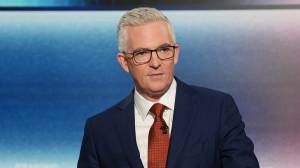
But given legacy media skews old — and is getting older — in its demographics, perhaps having senior owners makes perfect sense for platforms that now rely heavily on attracting senior eyeballs. We’re kidding ourselves if we think people under 40 are ever going to start watching broadcast TV or reading newspapers in meaningful numbers again, no matter who owns or runs them.
Where the argument falls down, however, is that the mainstream media likes to claim to be about more than just making money from an ageing demographic. It postures as the watchdog of power, the guardian of integrity in public policy, the sentinel of democracy. On whose behalf is a media owned by people over 70 and run by people over 50 for people over 50 acting as a watchdog? Which public interest is being pursued when there are so many examples of intergenerational tension over major policies?
And when all of us oldies — because we know that our beloved Crikey readership also skews old — have passed on, making way for younger people who have never developed the habit of consuming mainstream media, what will happen to that watchdog role?
