

There are some games where the basic idea sounds so simple that you wonder how a developer can possibly make an entire game out of it.
Moonlighter 2: The Endless Vault is one of those games.
Go into a dungeon.
Kill things.
Grab everything that isn’t nailed down.
Try not to die.
Take it all home.
Put it in your shop.
Convince people to pay stupid amounts of money for it.
Spend that money making yourself stronger.
Then go back into the dungeon and do it all over again.
And somehow, it is bloody addictive.
I have already had hands-on time with Moonlighter 2: The Endless Vault before its full release, so returning to the game now that the 1.0 version is available is an interesting experience. The foundation was already clear: Digital Sun had taken the core idea of the original Moonlighter and pushed it into a much larger 3D adventure.
Now the complete game is here, with the story finished, the full progression loop in place and Will’s latest adventure properly available to play from beginning to end. The sequel launched on 2 September 2026 for PC, PlayStation 5, Xbox Series X|S and Nintendo Switch 2.
The big question is whether Moonlighter 2 has managed to improve on what made the original so bloody enjoyable without losing the charm that made it work in the first place.
Welcome Back, Will
Moonlighter 2 once again puts you in control of Will, the adventurer-turned-shopkeeper who is considerably better at swinging a weapon than he probably has any right to be for someone who spends half his life running a shop.
This time, Will and his companions find themselves stranded in the village of Tresna, with their homeland out of reach and an interdimensional problem standing between them and getting back home. The mysterious Endless Vault offers a potential route forward, but naturally there is a rather large collection of monsters, treasure and trouble standing in the way.
It is a suitably ridiculous setup for a game that has always mixed dungeon crawling with running a shop.
And that mixture remains the heart of Moonlighter 2.
The Dungeon and the Shop
The reason Moonlighter worked so well in the first place was because it created two completely different gameplay loops and somehow made them feed directly into one another.
Moonlighter 2 understands this perfectly.
When you head into the Vault, the objective is simple: get as much valuable loot as possible and get the hell out before something kills you.
But there is an important complication.
Your backpack is not simply somewhere to dump everything you find.
Managing your inventory becomes part of the game.
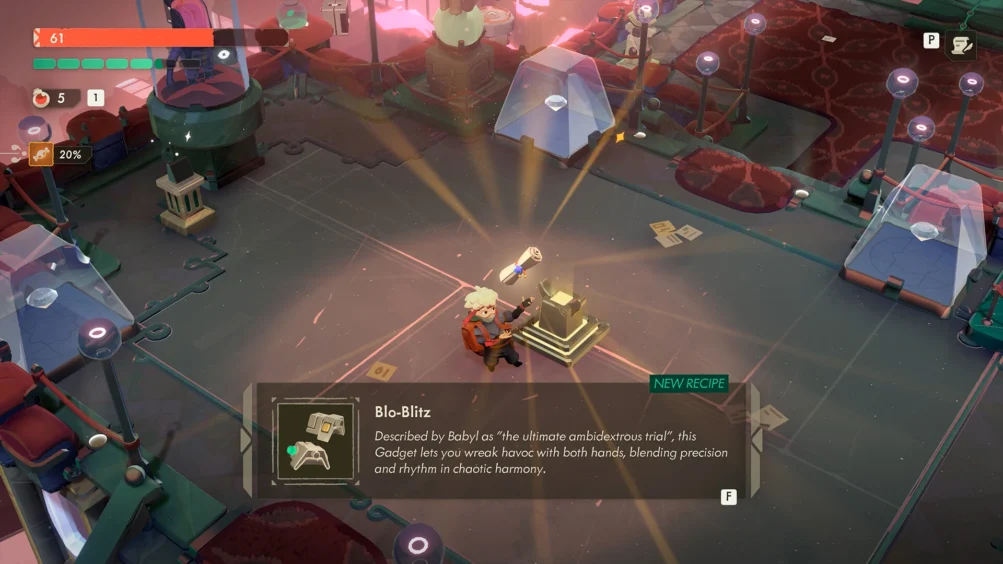
Items have different properties and can interact with one another, meaning that how you arrange and manage your loot can affect what happens to it. The backpack therefore becomes a small puzzle in itself, with decisions to make about what you keep, what you combine and what you are willing to risk taking deeper into a run.
And that is where the greed comes in.
You find something valuable.
You think you can carry one more thing.
So you continue.
Then you find something even better.
Now you definitely can’t leave.
Then something massive decides that your shopping trip has gone on long enough.
And suddenly you are desperately trying to escape with a backpack full of treasure.
That risk-and-reward loop is fantastic.
The Shop Is Still the Star
The dungeon crawling is fun, but honestly, I think the shop is where Moonlighter 2 really earns its keep.
Returning from an adventure with a backpack full of loot and then deciding how much everything is worth is strangely satisfying.
You aren’t simply selling items to an anonymous merchant.
You are running the bloody shop.
You arrange your stock, set prices, watch customers react and attempt to find that perfect point where you’re making as much money as possible without sending everyone running out of the door.
Price something too cheaply and you’re leaving money on the table.
Price something too aggressively and customers aren’t going to be impressed.
Get it right and suddenly you’re watching the money roll in.
That simple system creates a surprisingly addictive gameplay loop because every successful shop session immediately gives you another reason to go adventuring.
More money means better equipment.
Better equipment means deeper runs.
Deeper runs mean better loot.
Better loot means more money.
And around we go again.
It Looks Completely Different
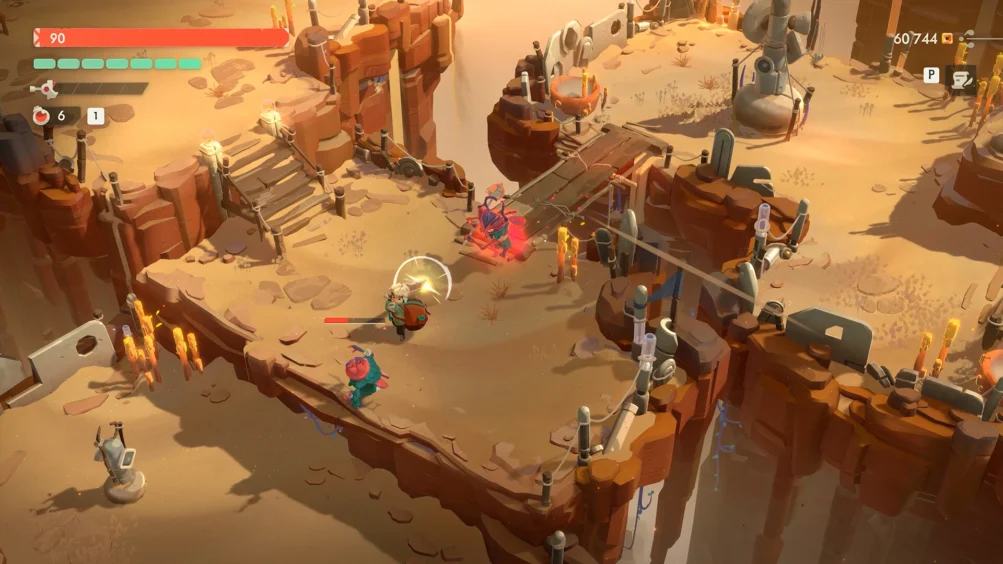
The most obvious change from the original Moonlighter is the move into full 3D.
And bloody hell, it suits the game.
Digital Sun has managed to retain the colourful personality of Moonlighter while giving the world considerably more depth.
The environments are vibrant, the characters have plenty of personality and the whole game has a slightly stylised look that prevents it from disappearing into the sea of generic 3D RPGs.
This isn’t trying to be photorealistic.
It doesn’t need to be.
The exaggerated visual style works extremely well with the game’s humour and colourful fantasy setting.
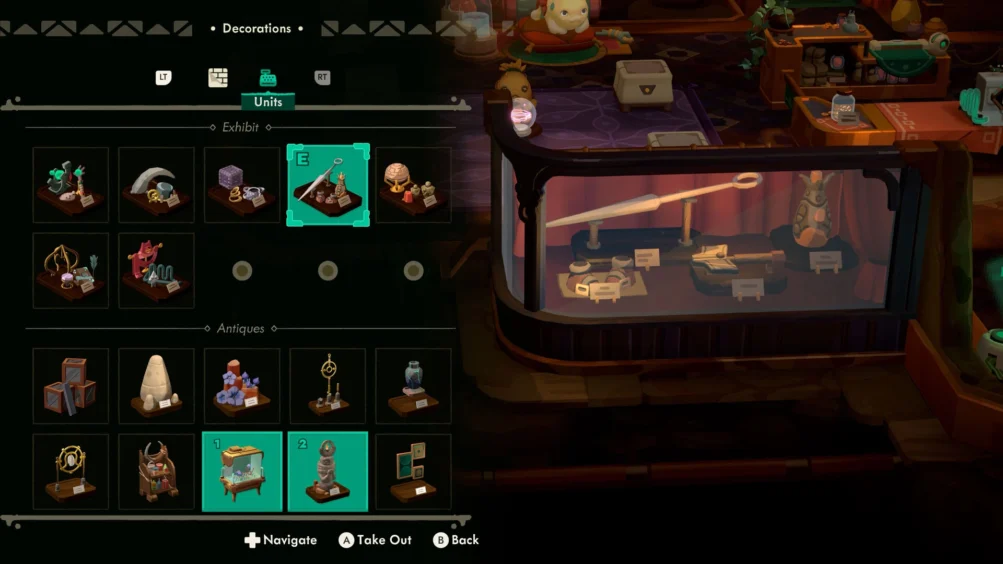
It also makes the shop itself considerably more enjoyable to customise and spend time in.
Combat Hasn’t Lost Its Identity
Moving from 2D to 3D could easily have ruined the combat.
It hasn’t.
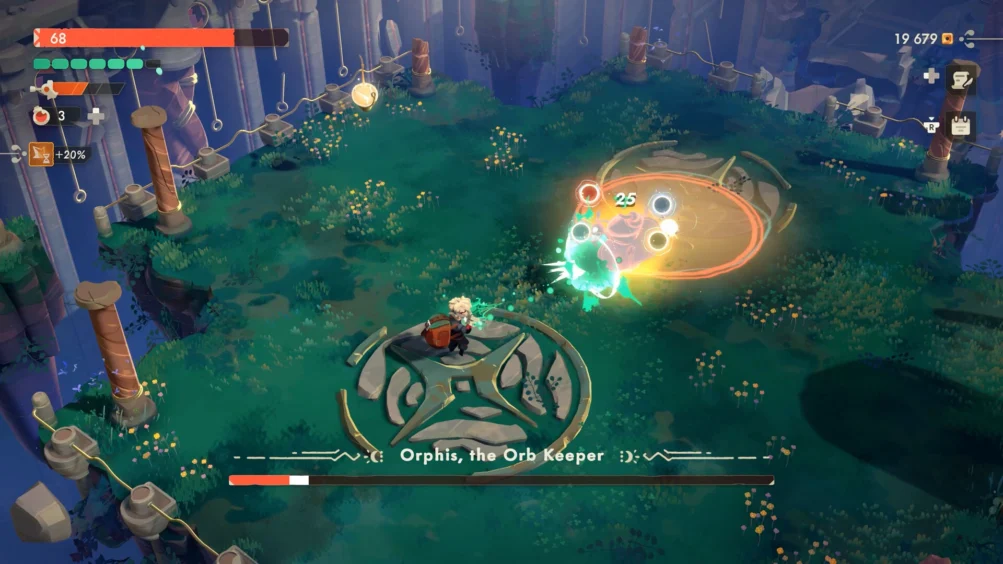
Will remains fast, responsive and capable of switching between different weapons depending on what you want from a run.
There are melee and ranged options, dodging, attacks and special abilities, while enemies become progressively more dangerous as you venture further into the Vault.
The combat isn’t trying to compete with the deepest action RPGs on the market.
It doesn’t need to.
Its job is to make every dungeon run exciting enough that you don’t simply think of combat as an annoying obstacle between you and the treasure.
For the most part, it succeeds.
The further you get, the more important it becomes to understand what you’re fighting rather than simply charging forward and hitting everything in sight.
Roguelike Elements Make Every Run Different
Moonlighter 2 embraces its roguelite structure without allowing it to overwhelm the rest of the game.
Runs offer different rooms, encounters, treasure opportunities and perks, giving you decisions to make about how you want to approach each expedition.
You might prioritise treasure because you’re desperate for money.
You might focus on combat because you’re looking for a particular upgrade.
Or you might decide that getting to the boss with as much health as possible is more important than filling your backpack with every shiny object you can find.
That flexibility gives each run a slightly different rhythm.
And because the entire purpose of the run is ultimately to bring something home that will improve your next attempt, failure rarely feels completely pointless.
The Endless Vault
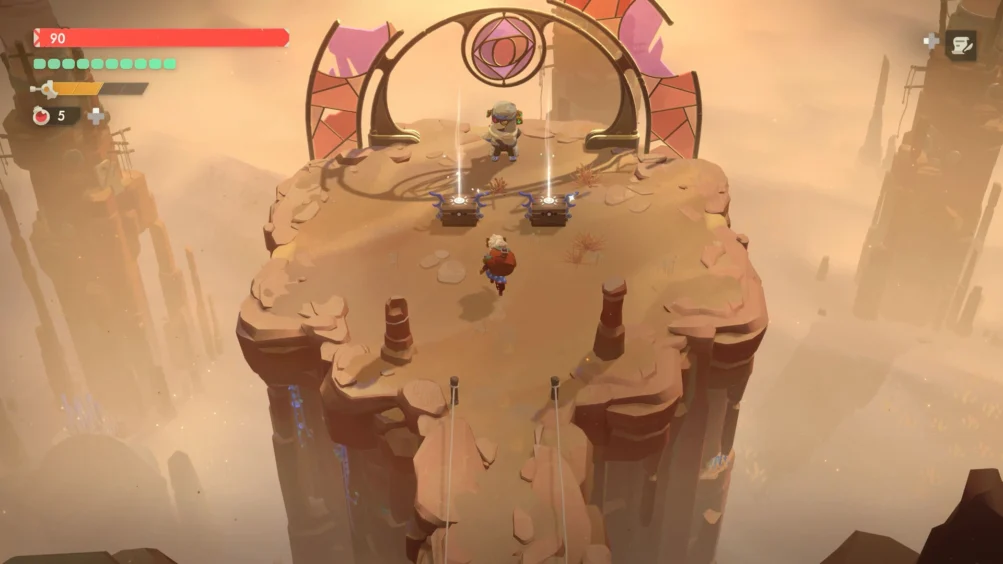
The Endless Vault is obviously a major part of the sequel’s identity.
It gives the game an ongoing challenge beyond simply completing the main story and provides another reason to keep improving Will, the shop and your equipment.
The deeper you go, the greater the risks and rewards become.
That makes the Vault a natural fit for Moonlighter’s entire design philosophy.
You are constantly balancing greed against survival.
Do you leave now with what you’ve got?
Or do you push further?
That question never really goes away.
And that is exactly why the game can be so difficult to put down.
There Is a Lot to Upgrade
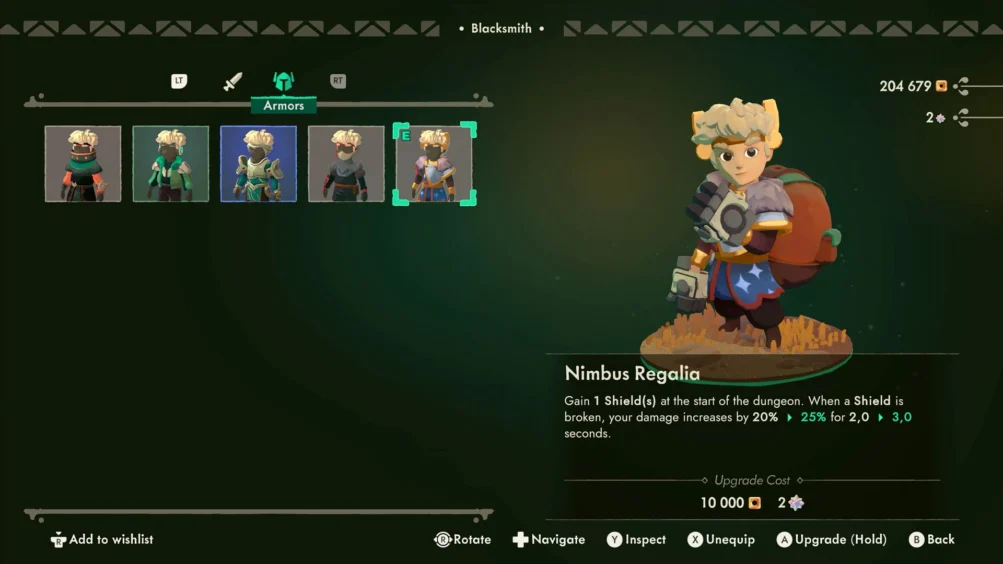
One of the most satisfying aspects of Moonlighter 2 is how many different things compete for your hard-earned money.
You can improve Will.
You can improve your equipment.
You can improve your backpack.
You can improve your shop.
You can customise your surroundings.
And naturally, every upgrade creates another reason to make another run.
This is where Digital Sun has done a particularly good job of keeping the progression loop moving.
There is almost always something sitting just beyond your current financial reach.
And if you’re anything like me, that means you immediately want it.
The Story Has More Purpose This Time
The original Moonlighter was never exactly a game you played primarily for its deep narrative.
Moonlighter 2 gives Will and his companions a much stronger reason to keep moving forward.
The story revolves around trying to recover what has been lost while dealing with the strange world of Tresna and the mysterious forces behind the Endless Vault.
The full 1.0 release also completes the narrative content that was unavailable during the earlier Early Access build, giving the game a proper conclusion rather than leaving the story hanging.
It isn’t going to replace a huge cinematic RPG in the storytelling department, but it gives the adventure direction.
And that’s important.
You’re not simply running dungeons forever because the developers needed something to fill the map.
There is an actual reason to keep going.
Where Moonlighter 2 Can Become Repetitive
There is one unavoidable problem with a game built around a deliberately repetitive loop.
Eventually, you are going to repeat that loop.
Dungeon.
Loot.
Shop.
Upgrade.
Dungeon again.
For a while, this is bloody brilliant.
But eventually you may find yourself thinking that you’ve done this particular routine rather a lot.
The roguelite structure helps, but it doesn’t completely eliminate repetition.
And while there is a substantial amount of loot and progression to chase, players who aren’t naturally attracted to the “one more run” mentality may find the structure a little exhausting.
There is also an argument that the jump from Early Access to 1.0 doesn’t feel as enormous as someone who has already spent considerable time with the game might have hoped. The 1.0 version adds the completed narrative and additional systems and customisation, but the core dungeon and shop structure was already firmly established in Early Access.
For someone starting with the complete release, however, that is much less of a problem.
The 3D Transition Works
This deserves its own section because it could have gone horribly wrong.
The original Moonlighter had a distinctive pixel-art identity.
Moonlighter 2 could easily have lost that personality by moving into 3D.
Instead, it feels like an evolution.
The characters, environments and animations have been redesigned for the new perspective without throwing away the charm of the original.
It is colourful, expressive and, most importantly, immediately recognisable as Moonlighter.
Is It Better Than the Original?
That’s a difficult question because the two games are trying to achieve similar things in different ways.
Moonlighter 2 is bigger, more ambitious and more visually impressive.
The shopkeeping loop remains just as addictive, while the 3D world provides more room for exploration and a more substantial adventure.
But there is something about the simplicity of the original that Moonlighter 2 can never quite reproduce.
The sequel has more systems, more customisation and more depth, but sometimes more isn’t automatically better.
Thankfully, Moonlighter 2 never becomes so complicated that it loses sight of the simple idea at its heart.
Go adventuring.
Bring home treasure.
Sell it.
Get richer.
Get stronger.
Go deeper.
That’s Moonlighter.
Final Thoughts
Coming back to Moonlighter 2: The Endless Vault for its full release has reinforced something I felt during my earlier hands-on time with the game.
There is a bloody good idea at the heart of this series.
The combination of action RPG combat, roguelite dungeon crawling, inventory management and shopkeeping shouldn’t work as naturally as it does.
But it does.
And the sequel takes that idea and expands it without completely losing what made the original special.
The move into 3D works remarkably well. The shop is still incredibly satisfying to run. Managing your backpack adds another layer of decision-making to every run, while the Endless Vault gives you a reason to keep pushing yourself long after you’ve already made a decent amount of progress.
It isn’t perfect.
The gameplay loop can become repetitive, combat isn’t going to satisfy players looking for an incredibly deep action system, and those who spent a long time with the Early Access version may not find the jump to 1.0 quite as dramatic as someone discovering the game for the first time.
But for someone picking up Moonlighter 2 now, there is a lot to like.
It is charming.
It is addictive.
It looks bloody lovely.
And perhaps most importantly, it understands exactly what made Moonlighter work in the first place.
Moonlighter 2 Trailer
Review Summary
What is Moonlighter 2: The Endless Vault?
Moonlighter 2: The Endless Vault is an action RPG with roguelite elements developed by Digital Sun and published by 11 bit studios. Players control Will, an adventurer and shopkeeper who explores dangerous dungeons, collects relics and sells his discoveries to fund equipment, shop and character upgrades.
What makes Moonlighter 2 different?
The game combines dungeon crawling with running a shop. Players must decide how much loot they can safely carry, return home before losing valuable items, set prices for their discoveries and use their profits to improve Will and his shop.
Is the shopkeeping good?
Yes. Shop management remains one of the strongest parts of Moonlighter 2. Setting prices, arranging stock and trying to maximise profits creates an addictive second gameplay loop that works alongside the dungeon exploration.
Is Moonlighter 2 a roguelite?
Yes. Runs feature different encounters, rewards and perks, with players deciding how they want to approach each expedition. The Endless Vault provides an additional long-term challenge and progression system.
Is Moonlighter 2 better than the original?
Moonlighter 2 is a larger and more ambitious sequel rather than simply a replacement for the original. The move to 3D, expanded progression and larger adventure give the sequel considerably more scope while retaining the original’s dungeon-to-shop gameplay loop.
Is Moonlighter 2 worth playing?
Yes. Moonlighter 2 is particularly enjoyable for players who like action RPGs, roguelites, dungeon crawlers, inventory management and shopkeeping. Its biggest weakness is that the central run-loot-sell-upgrade loop can become repetitive, but the addictive progression and excellent shop mechanics make it easy to keep coming back.
What score does Moonlighter 2: The Endless Vault get?
8/10
